Loading Paper into the Paper Tray
The method of loading paper varies for each tray type.

|
|
Before loading paper into a tray, check the paper size and type that can be loaded in the tray.
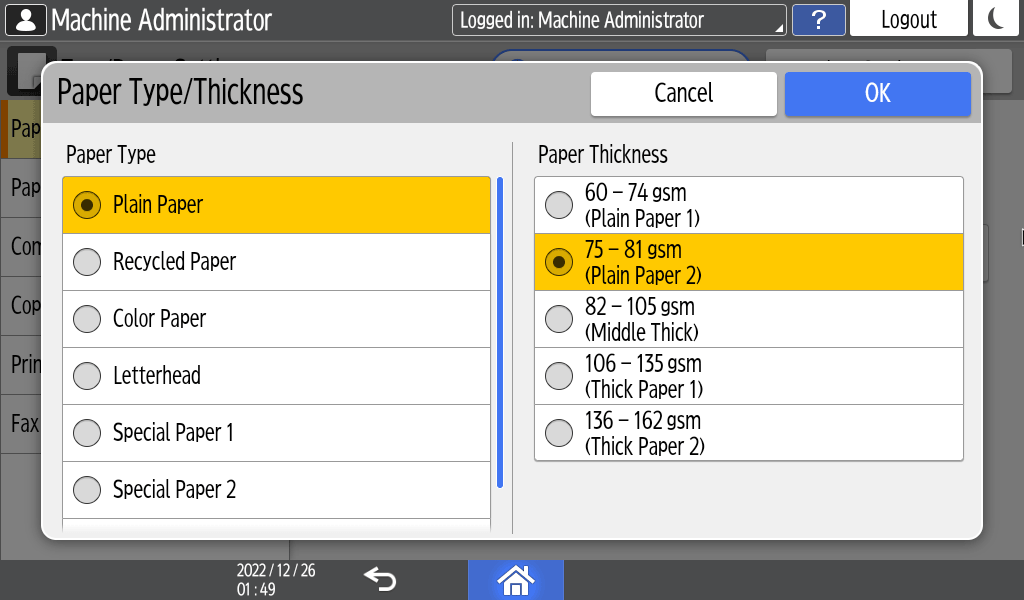
To load thin paper, thick paper, or other special paper, specify the paper type or thickness in [Tray/Paper Settings] of [Settings].
Check the paper setting before printing. If the paper differs from the paper setting, a mismatch error will occur when you print.
Straighten curled or warped paper before loading.
When loading paper on a tray which has a few sheets of paper, multiple sheets of paper may be fed at once from the tray. Take out all sheets, fan the sheets, and then load them again.
If a paper tray is pushed vigorously when putting it back into place, the position of the tray's side fences may slip out of place.
When loading a low number of sheets, be sure not to squeeze the side fences in too tightly. If the side fences are squeezed too tightly against the paper, the edges may crease, thin paper may wrinkle, or the paper may misfeed.
You may hear the sound of rubbing paper. This is not a malfunction.
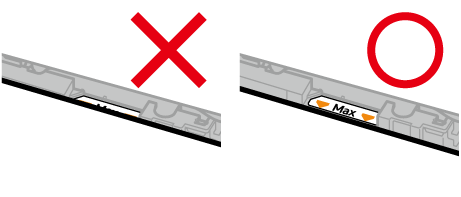
Do not stack paper over the limit mark.
Adjust the side and end fences according to the paper size.

Do not stack paper over the limit mark. If you load paper over the limit mark, the printed images may become slanted or a paper jam may occur.
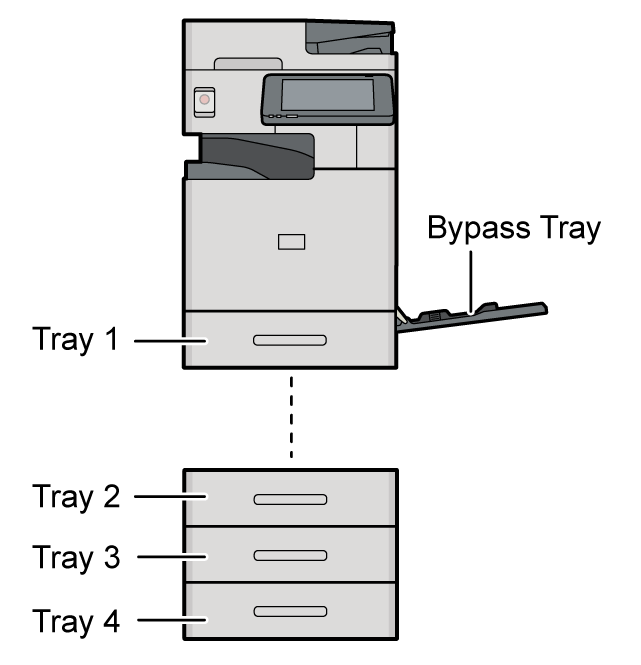
Load paper into every tray in the same way. In the following example procedure, Tray 1 is used.
Check that paper in the paper tray is not being used, and then pull the tray out carefully.
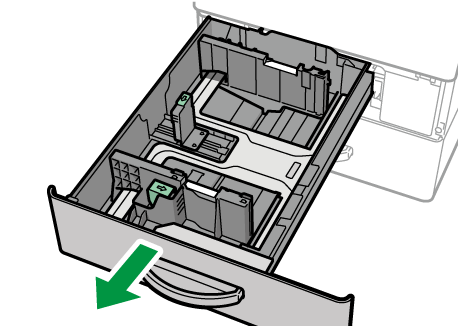
Remove paper if loaded.
While pressing the release lever of the side fence, slide the side fences outward.
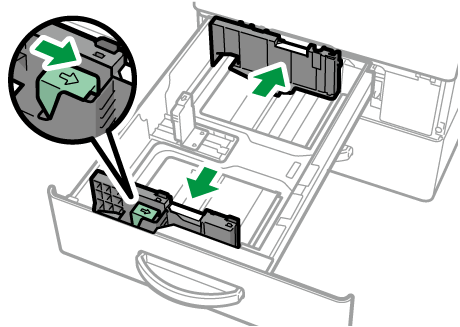
While pressing the release lever of the end fence, slide the end fence outward.
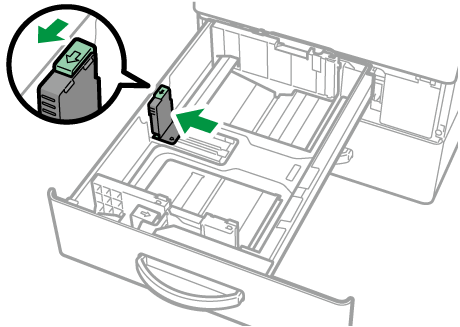
Square the paper and load it with the print side facing up.
Fan sheets before loading so that multiple sheets of paper do not stick to each other and are not fed at once.
Check the paper edges are aligned at the right side.
Do not stack paper over the limit mark.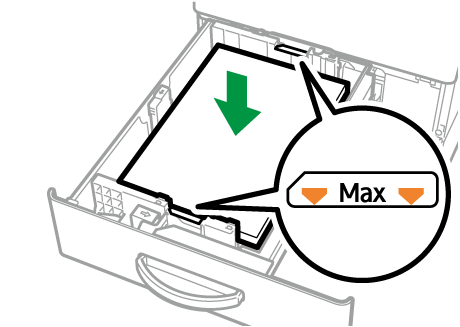
While pressing the release lever, adjust the side and end fences to the paper size.
Do not leave spaces between the paper and fences.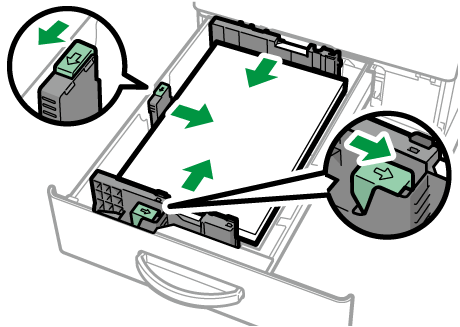
Push the tray in the original position carefully.
To return the completely pulled out tray to the original position, push the tray straight in. If the paper tray is damaged, it may cause a paper jam. Also, if you push the tray forcibly, the side fence of the tray may be moved.
Use the bypass tray to load paper of a size that cannot be loaded into Tray 1 to 4, such as label paper (adhesive labels).
The maximum number of sheets you can load at the same time depends on paper type.
Recommended Paper Sizes and Types
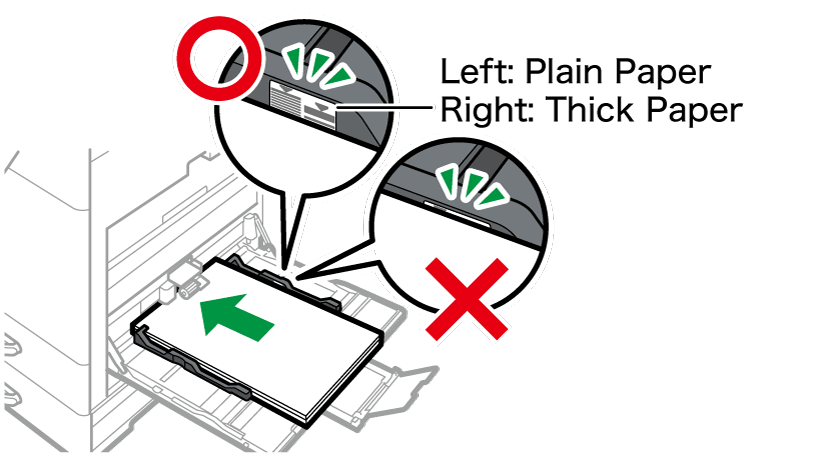
Do not stack paper over the limit mark. If you load paper over the limit mark, the print image may be slanted or the paper may be jammed.
Open the bypass tray.
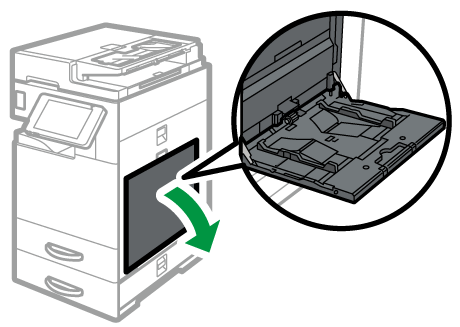
Make sure that the bypass tray is fully opened.
When loading paper larger than the bypass tray (longer than A4 or 8 1/2 × 11 paper in landscape orientation), pull out the extender.Load the paper with the print side down, and push it in lightly until you hear a beep.
Fan sheets before loading so that multiple sheets of paper do not stick to each other and are not fed at once.
When loading envelopes or letterhead paper, confirm the orientation, face and back, or location of flaps.
Envelope Orientation and Recommended Status
Loading Orientation-fixed Paper or Two-sided PaperAlign the paper guides to the paper size.
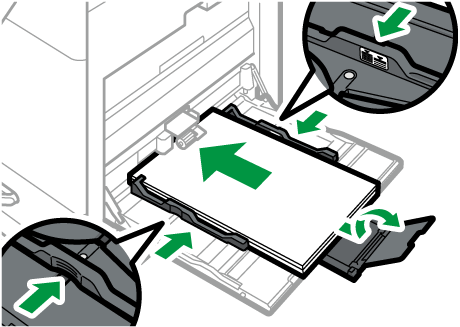

To load paper on the bypass tray, it is better to orient it in the direction of
 .
.
Press [Settings] on the Home screen.
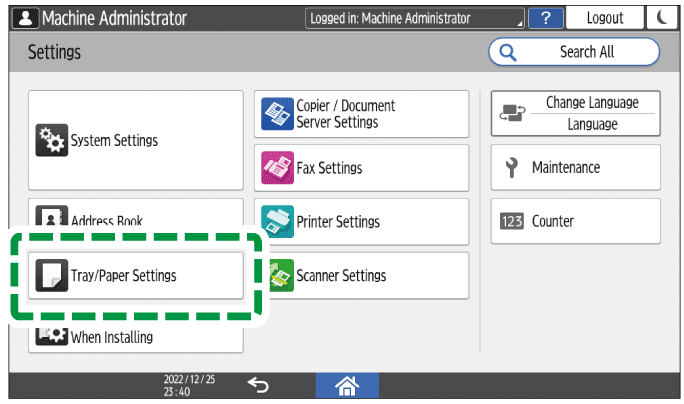
Press [Tray/Paper Settings].
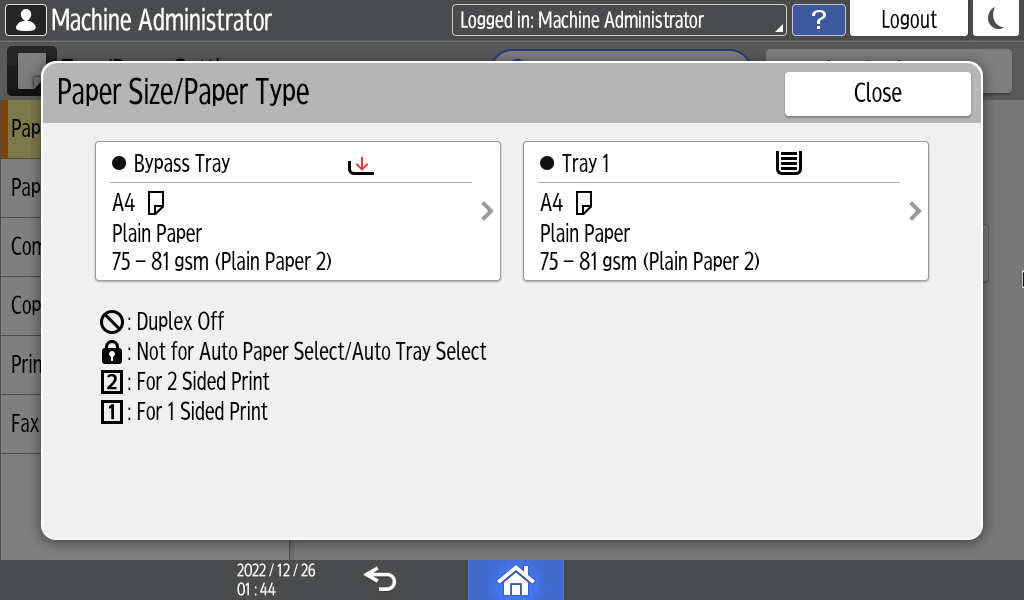
Press [Paper Size/Paper Type]
 [Paper Size/Paper Type].
Press one tray to set.
Press [Paper Size].
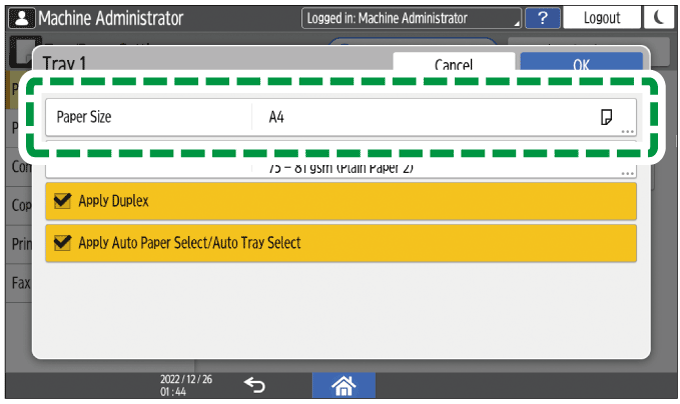
To specify for the bypass tray, press [Paper Size: Printer].Choose one paper size from the list shown, and then press [OK].
Press [OK].
After completing the configuration, press [Home] (
 ).
).
Press [Settings] on the Home screen.
Press [Tray/Paper Settings].
Press [Paper Size/Paper Type]
 [Paper Size/Paper Type].
Press one tray to set.
Press [Paper Size].
To specify for the bypass tray, press [Paper Size: Printer].
Press [Custom] from the list shown.
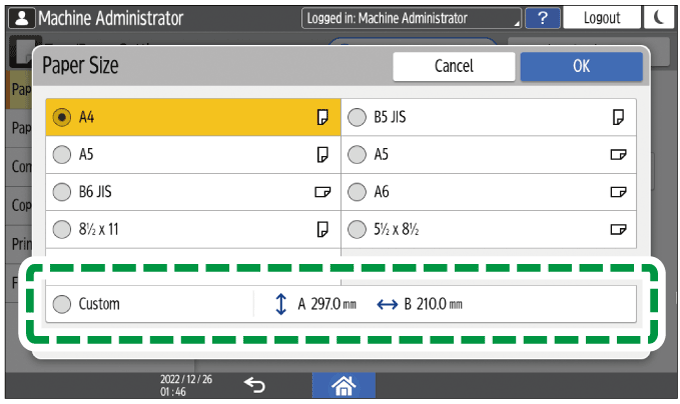
Press the value in the "A" or "B" field, and then enter the new value.
Specify the values within the numbers of "< >", and then press [Done].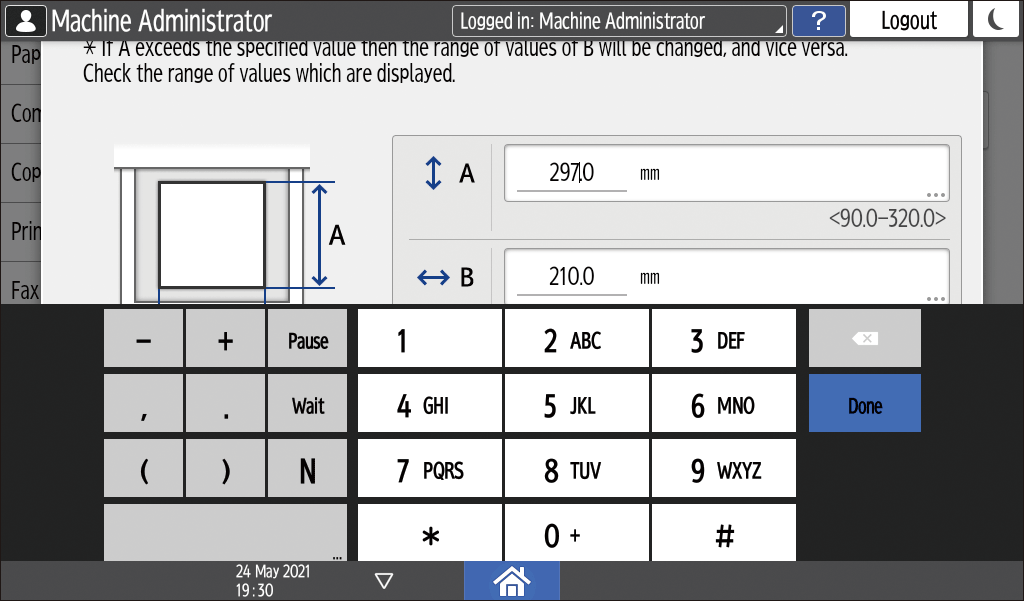
Press [OK] three times.
After completing the configuration, press [Home] (
).
If the print settings and the loaded paper that are used for a print job do not match, a mismatch error occurs.
Check and specify the paper settings before you start printing.
Before you change the settings, confirm the priority of the paper settings for printing (priority to the printer driver or to the control panel).
[Settings]
[Printer Settings] [System] [Paper In/Out] [Tray Setting Priority][Apply Auto Paper Select/Auto Tray Select] is available only for copier and printer functions.
On the printer driver
Check the settings of paper tray and paper type on the printer driver and make sure the settings match the loaded paper.
On the control panel
Press [Settings] on the Home screen.
Press [Tray/Paper Settings].
Press [Paper Size/Paper Type]
Press one tray to set.
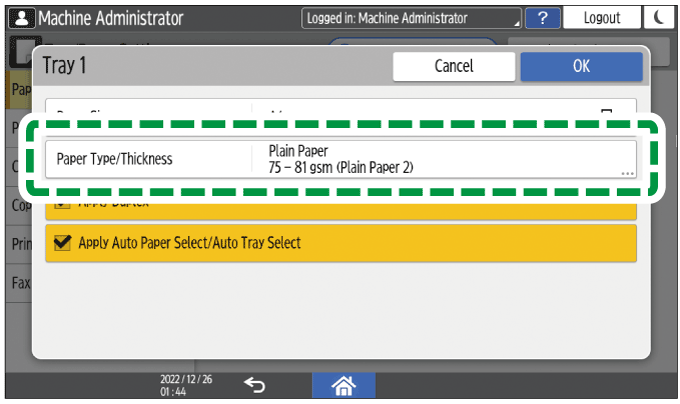
Press [Paper Type/Thickness].
Choose one paper type and paper thickness from the list shown, and then press [OK].
Press [OK].
After completing the configuration, press [Home] (